Can You Epoxy a Cracked or Stained Garage Floor?
By In Des Moines · Before You Hire · 5 min read
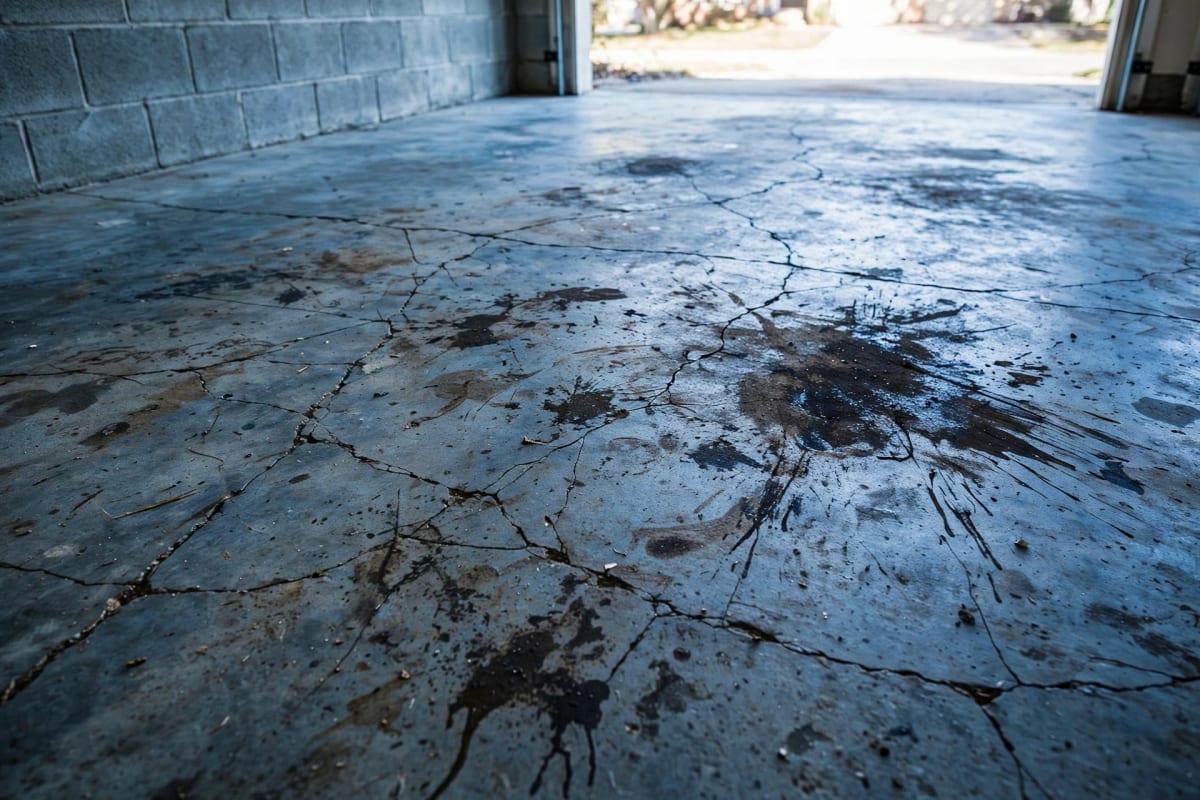
Most Des Moines garages that need a coating do not start out pretty. There are cracks from winters of freeze and thaw, dark oil spots under where a car has parked for years, tire marks, paint spills, and the pale outline of an old rug or mat. In most cases, yes — a cracked or stained floor can be coated. What decides the result is what gets done to repair and prepare it before any coating goes down.
The short answer
Cracks, chips, pitting, and oil stains are normal in Iowa garages, and professional installers deal with them every week. Small to moderate cracks get cleaned out, filled, and ground flat. Oil and other contaminants get degreased, ground away, or sealed with the right primer so the coating can bond. The exceptions are structural problems: a slab that is heaving, sinking, or breaking apart in large sections, or concrete so soft and crumbling that grinding cannot find a solid surface. Those floors need concrete repair — or in rare cases replacement — before a coating makes sense. An honest installer will tell you which category your floor is in during the quote, not after the coating fails.
Why cracks do not automatically disqualify a floor
Concrete cracks. That is not a sales line; it is how the material behaves as it cures, shifts, and goes through Iowa seasons. A hairline crack that has been stable for years is a very different problem from a wide crack that opens and closes or has one side sitting higher than the other. Stable cracks are usually routed or ground open slightly, filled with a flexible or semi-rigid repair material, allowed to cure, and then ground flush with the surrounding floor. Done right, the repair becomes part of the slab the coating grips.
What happens with oil stains and other contamination
Oil is the bigger bonding risk than a crack. Epoxy and related coatings need clean, porous concrete to grip. Oil that has soaked into the slab for years can prevent that grip in the exact spots where tires sit and turn. The fix starts with degreasing, but surface cleaning alone is often not enough. Diamond grinding removes the contaminated top layer and opens the concrete at the same time, which is why professional prep matters so much on a stained floor. In stubborn cases an installer may use an oil-tolerant primer. What does not work is acid washing a stained floor, rinsing it, and hoping the coating holds — that is the failure pattern behind many peeling floors we covered when we explained how long an epoxy garage floor lasts.
The same logic applies to old paint, sealers, and previous DIY coatings. If something is already on the concrete, the new coating is only as solid as that old layer's bond. Sound, well-bonded material may be ground and recoated in some systems. Peeling or poorly bonded material has to come off. A simple test during the visit — scraping, grinding a small spot, checking how the surface responds — tells an experienced crew more than a glance from the door.
The prep sequence on a damaged floor
- Inspect and test: Check crack movement, moisture, hardness, and contamination before choosing a system.
- Grind: Diamond grinding cleans the surface, removes weak and stained material, and profiles the concrete for bonding.
- Repair: Fill cracks, chips, and pitting; let repairs cure fully, then grind them level.
- Clean again: Vacuum all dust so the primer lands on concrete, not debris.
- Prime and coat: Apply the base system suited to the slab, including moisture or oil treatment where testing showed a need.
None of that shows in finished photos, but it is the difference between a floor that lasts and one that lifts in sheets. When you compare quotes, this sequence is what you are really comparing.
When to fix the concrete first, or wait
There are times to pause. If water is actively coming up through cracks, if sections of slab have settled enough to trip over, or if large areas are spalling down to crumbling aggregate, spend the first money on the concrete itself. Coating over an active structural problem locks the problem in and makes the eventual repair more expensive. A reputable local company would rather lose a coating job this month than coat a floor it knows will fail. That judgment is part of what you are hiring.
The bottom line
A cracked or stained garage floor is the normal starting point in Des Moines, not a disqualifier. Stable cracks get filled and ground flat, oil gets ground out or primed correctly, and old failing coatings get removed — then a professional system can bond and last the way we described in our guide to epoxy versus polyurea. Get the assessment in person, ask what prep and repairs are included in writing, and start at Epoxy Flooring Des Moines if you want a straight answer on your specific slab.
In Des Moines is a local team that builds and ranks websites for Des Moines service businesses. We write what we learn from real projects around the metro — straight answers, no sales pitch.
