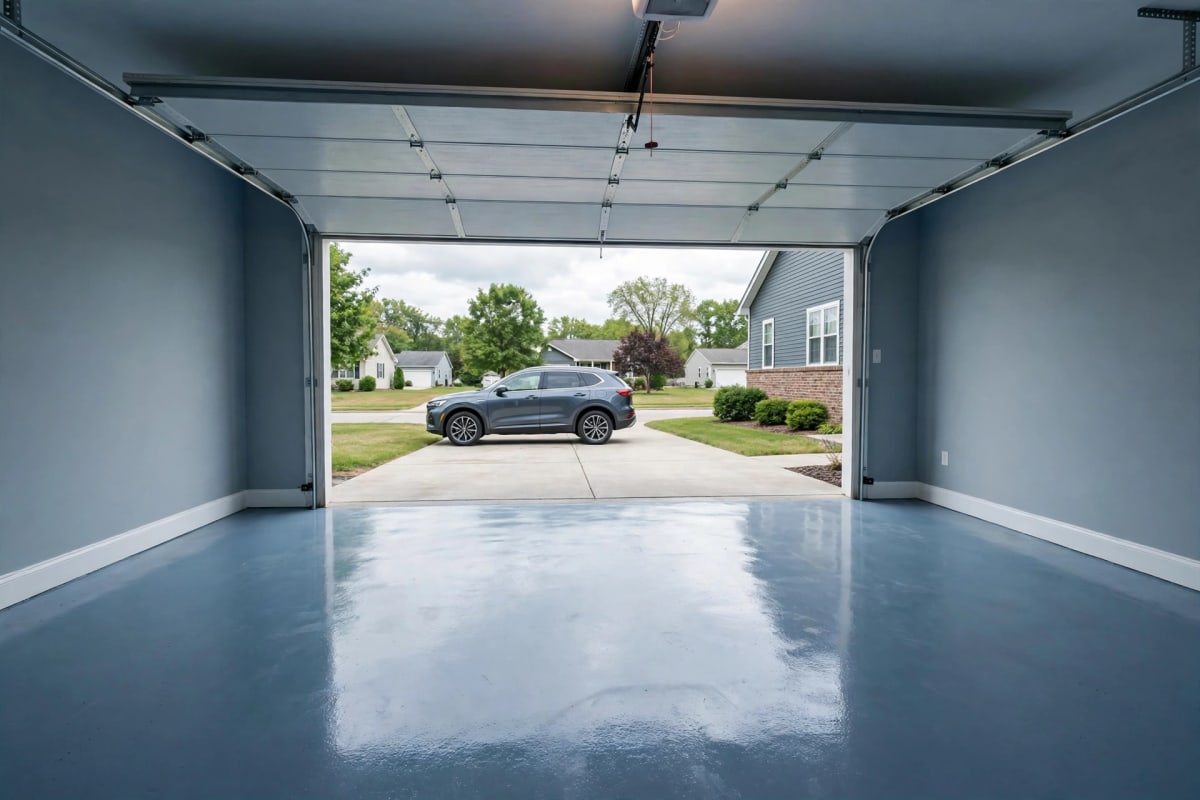
How Long Before You Can Park on a New Epoxy Floor?
By In Des Moines · Care & Durability · 5 min read
It is the first question Des Moines homeowners ask once the coating is down: when can I put the car back in? The floor looks hard within hours. It feels dry to the touch the same day. That is exactly why this question matters — a coating can look ready long before it is ready for the weight, heat, and turning tires of a parked car. Parking too early is one of the most common ways a good install gets damaged in its first week.
The short answer
For most professional epoxy and epoxy-based systems in a typical Iowa garage, plan on walking on the floor in about 24 hours, moving light items back in after two to three days, and parking a car on it after five to seven days. Some fast-cure systems, including many polyurea topcoats, shorten that parking window to 24 to 48 hours. Some slower or thicker epoxy builds in cool weather need the full week or a little longer. The installer who put the floor down should give you a specific date and time, not a guess, because they know which products were used, how thick they went on, and what the temperature and humidity were during the cure. If their number differs from this range, follow theirs.
Why a dry floor is not a cured floor
Drying and curing are not the same thing. Drying is what you see and feel: the surface is no longer wet or tacky. Curing is the chemical process underneath, as the coating hardens through its full thickness and bonds completely to the concrete. In the early days that bond and that hardness are still building. A tire does three things a shoe does not. It concentrates a heavy load on four small patches. It arrives hot after a drive, and hot tires can soften and lift a coating that has not fully cured, leaving marks or, in the worst case, peeling a section. And turning the steering wheel while the car is stationary twists those patches against the surface. That is why parking waits days, even when foot traffic is fine the next morning. See our guide to how long an epoxy garage floor lasts — the first week sets up a lot of that lifespan.
What changes the timeline
The product system. Traditional epoxies cure more slowly than polyurea and polyaspartic topcoats. A hybrid system — epoxy base for build and adhesion, faster topcoat for finish — lands somewhere in between. This is one of the practical differences behind the comparison in our post on epoxy versus polyurea garage floors.
Temperature. Coatings cure faster warm and slower cold. A summer install in a warm garage usually hits the short end of the range. A late-fall or winter install in an unheated Des Moines garage can add days, which is also why good installers watch the forecast and the slab temperature, not just the calendar.
Humidity and thickness. High humidity can slow some products. Thicker builds and extra coats each need their own cure time, and repairs underneath — like the crack and stain work in whether you can epoxy a cracked or stained floor — may still be curing under the coating.
The vehicle. A small sedan is gentler than a loaded work truck or an SUV on wide tires. Heavier vehicles and longer drives that heat the tires argue for the cautious end of your installer's range, not the optimistic one.
A safe first-week routine
- Day one: Stay off the floor except in socks if the installer allows it. Keep the garage closed to leaves, dust, and pets while the surface is at its most vulnerable.
- Days two and three: Light foot traffic is usually fine. Carry things in rather than dragging them. Hold off on ladders, jacks, and anything with small hard feet or wheels.
- Middle of the week: Light storage — bins, boxes, a bike — can usually return. Keep heavy tool chests, freezers, and workbenches on wheels out until the parking date, since their feet concentrate weight the same way tires do.
- Parking day: Park on clean, dry tires. For the first week or two, try not to turn the steering wheel while the car is standing still, and avoid parking immediately after a long highway drive if you can give the tires a few minutes to cool.
What if you parked too early?
Tire marks or a dulled patch where the tires sat do not always mean the floor has failed. Move the car back out and call the installer before trying to clean anything yourself — solvents and scrubbing can make an uncured spot worse. If the coating lifted or peeled, that section needs professional attention before water and road salt work under the edges.
The bottom line
Walk in about a day, store light things in two to three days, and park in five to seven days for most epoxy systems — sooner only if your installer confirms your specific fast-cure system allows it. The wait feels long when the driveway is full and the garage looks done, but it is the cheapest protection the floor will ever get. Get the parking date in writing at the end of install day, plan the week's parking around it, and if you are still at the quote stage, start at Epoxy Flooring Des Moines and read more on our blog before you book.
In Des Moines is a local team that builds and ranks websites for Des Moines service businesses. We write what we learn from real projects around the metro — straight answers, no sales pitch.
